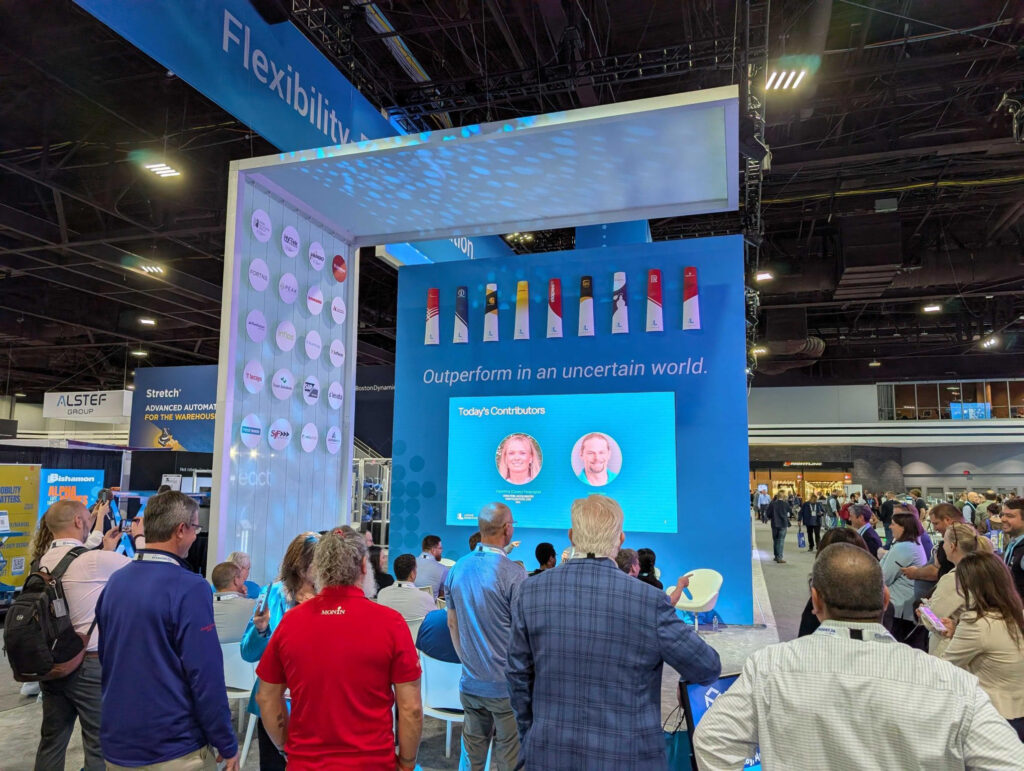
Last week, the Sequoia Group team attended MODEX 2026 in Atlanta, one of the largest gatherings of supply chain, warehouse, and automation leaders in North America.
MODEX is where the industry showcases what is possible.
But more importantly, it reveals what is actually changing.
Across keynote sessions, on-floor demonstrations, and conversations with operators and technology providers, one theme was clear:
Warehouse technology is advancing rapidly, but operational alignment is not keeping pace.
The Shift from Innovation to Application
There was no shortage of innovation on display.
Autonomous mobile robots.
AI-driven analytics platforms.
Advanced picking and fulfillment systems.
But unlike previous years, the conversation has shifted.
It is no longer:
“What can this technology do?”
It is now:
“Where does this actually work and where does it fail?”
That distinction matters.
Because many distributors are no longer experimenting.
They are investing.
And the cost of getting it wrong is high.
Automation Is Expanding, but So Is Complexity
Robotics and automation were central themes across MODEX.
From goods-to-person systems to AMRs and automated storage solutions, the capabilities have matured significantly.
The promise is clear:
- faster throughput
- reduced labor dependency
- improved accuracy
But the reality is more nuanced.
What many operators are discovering is that automation does not simplify operations by default.
It often introduces:
- new system dependencies
- integration challenges
- process constraints that did not exist before
In other words:
Automation increases performance only when the underlying operation is already aligned.
Without that alignment, it can increase complexity just as quickly as it increases speed.
AI Is Moving Closer to the Core
AI was everywhere at MODEX.
But unlike previous cycles of hype, the conversation is becoming more grounded.
The most relevant applications centered around:
- demand forecasting
- inventory optimization
- labor planning
- exception management
These are not experimental use cases.
They are operational levers.
However, the same constraint surfaced repeatedly:
AI is only as effective as the data and systems behind it.
Many distributors still operate with:
- fragmented data environments
- disconnected ERP and WMS platforms
- limited visibility across operations
Until those gaps are addressed, AI remains underutilized.
The Real Bottleneck Hasn’t Changed
Despite the advances in technology, one truth remains consistent:
Most operational issues are not caused by a lack of tools.
They are caused by misalignment between:
- systems
- processes
- and people
At MODEX, this showed up in subtle ways:
- systems that technically function but are not fully adopted
- workflows that rely on manual intervention despite automation
- reporting that does not reflect real-time operational conditions
These are not technology failures.
They are alignment failures.
What Distributors Should Take Away
For distributors evaluating automation, ERP upgrades, or warehouse modernization, the takeaway from MODEX is not to move faster.
It is to move more deliberately.
Before investing further in technology, organizations should be asking:
- Are our current systems aligned with how we operate today?
- Do we have the visibility needed to support automation decisions?
- Are we solving the right problem—or just adding new tools?
- Will this improve execution, or just increase complexity?
The answers to those questions determine whether technology becomes a competitive advantage, or an operational burden.
A Grounded Perspective
MODEX continues to be one of the most valuable industry events for seeing where the market is heading.
But the real value is not in the technology itself.
It is in understanding how and where that technology fits into real operations.
At Sequoia Group, that is where we focus.
Helping distributors:
- evaluate system performance
- align ERP and WMS strategy
- assess automation readiness
- reduce risk before major investments are made
Because the goal is not to implement more technology.
It is to make technology work.
Continuing the Conversation
If your organization is evaluating automation, AI, or warehouse system changes, the most important step is not choosing a platform.
It is understanding your current operation clearly enough to make the right decision.
That is where the conversation starts.