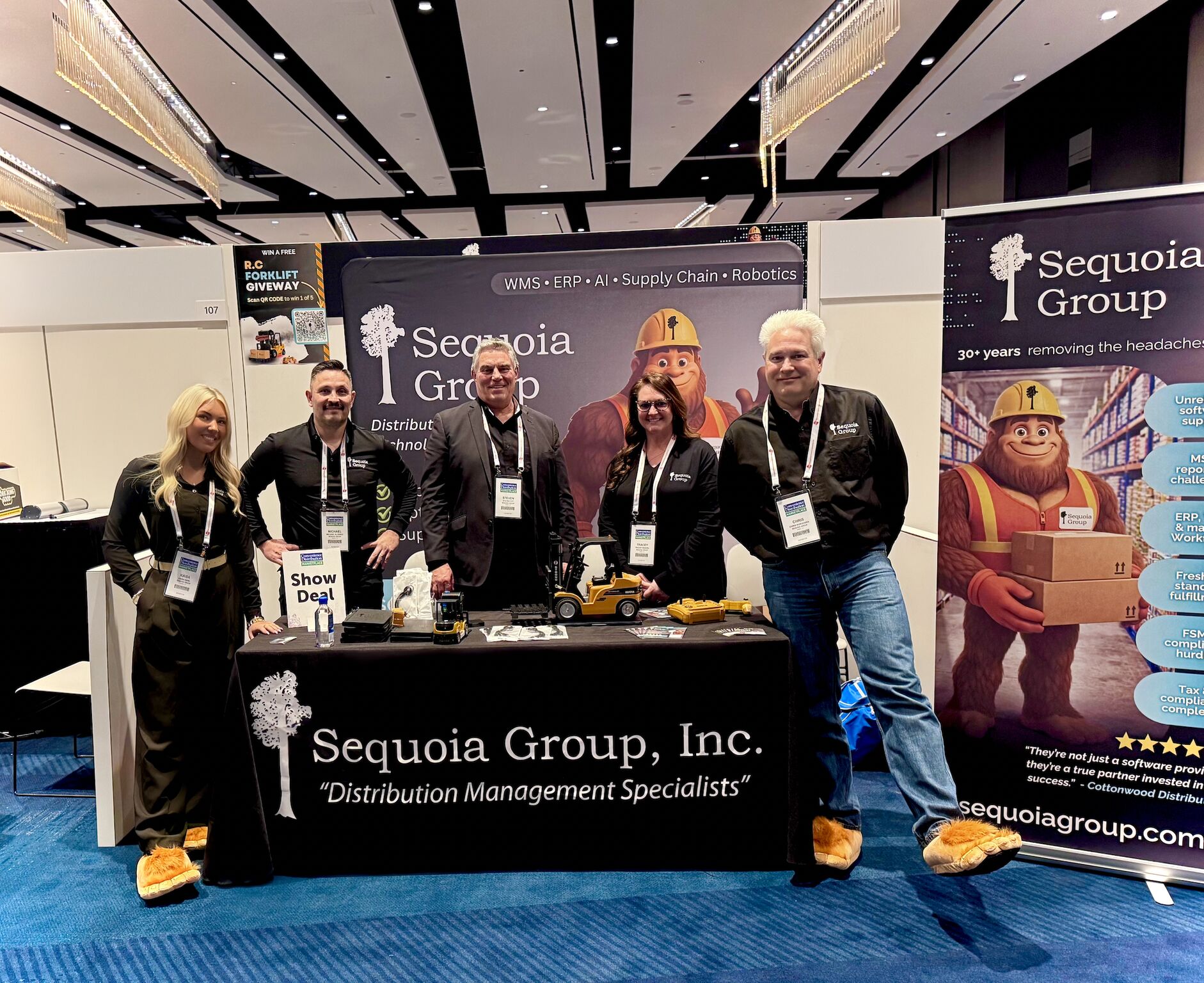
Last week, the Sequoia Group team attended CDA Marketplace 2026 in Arlington, Texas, where several hundred professionals from across the convenience and wholesale distribution industry gathered to discuss the future of the business.
CDA Marketplace is much more than a trade show.
It is one of the few environments where distributors, suppliers, and technology partners step out of day-to-day operations and speak candidly about what is actually working, and what is not.
Across education sessions, trade floor conversations, and peer discussions, a consistent message emerged:
The pace of change in distribution is accelerating, and the margin for error is shrinking.
A Community Built Around Real Conversations
Marketplace brought together a broad cross-section of the distribution ecosystem, from convenience and wholesale distributors to suppliers and technology providers.
But what stood out was not just the scale of the event. It was the quality of interaction.
From the Distributor Showcase to informal networking sessions, conversations were less about selling and more about comparing notes:
- What is actually working inside the warehouse
- Where systems are falling short
- How peers are navigating modernization decisions
As one attendee put it, the value is not just in the sessions, it is in “being able to network and learn from others in the industry.”
That dynamic matters.
Because in distribution, most major decisions are not made in isolation. They are shaped by what others in the industry are seeing, testing, and learning in real time.
The Conversations Behind the Headlines
Several themes surfaced consistently throughout the week, but what made this year different was how specific and practical those conversations have become.
AI and Automation Are No Longer Theoretical
The conversation around AI and automation has shifted.
The question is no longer if these technologies matter.
It is:
Where do we start, and how do we avoid getting it wrong?
In one session, Benj Cohen of Proton.ai noted that most distributors are sitting on large volumes of disconnected data. The opportunity with AI is not just automation, but making that data usable across the organization.
At the same time, many operators acknowledged a familiar constraint:
Legacy ERP systems that were never designed to support modern automation or real-time analytics.
The gap is no longer awareness.
It is execution.
FSMA Compliance Is Driving Urgency
Regulatory pressure continues to increase, particularly around FSMA Section 204(d).
Sessions focused on compliance made one thing clear:
Waiting is no longer an option.
As Jennifer McEntire, Ph.D. advised during one session:
“Don’t let perfection be the enemy of good. Start with what you can do now and keep building on it.”
For many distributors, this is forcing a re-evaluation of existing systems.
Older platforms were not built with modern traceability, reporting, and compliance requirements in mind.
And as timelines tighten, the cost of inaction increases.
Workforce Dynamics Are Shifting
Another theme that surfaced repeatedly was the evolving workforce.
Distribution companies today are balancing:
- Experienced operators with decades of institutional knowledge
- Younger employees who expect modern systems and digital tools
Steve Bench’s keynote highlighted how generational differences influence communication, expectations, and decision-making in the workplace.
For many leaders, the challenge is not choosing one approach over the other.
It is learning how to integrate both.
Because systems that rely too heavily on tribal knowledge (or are too complex for new users) which creates operational risk.
Security Is Becoming Operational, Not Just Technical
As systems become more connected, cybersecurity is no longer viewed as an IT issue alone.
Distributors are increasingly thinking about:
- warehouse break-ins and product theft
- system vulnerabilities
- data protection across the supply chain
Panel discussions shared real-world experiences and practical steps, including AI-supported monitoring and stronger coordination with local law enforcement.
The takeaway was straightforward:
Security is now part of operational resilience.
Why Trust Still Drives Decisions
For all the discussion around technology, one theme remained constant:
Trust matters.
Many distributors at Marketplace are family-owned businesses that have been operating for decades.
Decisions about ERP, WMS, automation, and compliance are not made quickly.
They are made carefully.
Leaders are not just evaluating platforms.
They are evaluating partners.
People who understand their business.
People who will be there after implementation.
People who can help them navigate change without unnecessary risk.
Technology alone is not enough.
A Different Kind of Presence
Of course, no Marketplace would be complete without a few memorable moments.
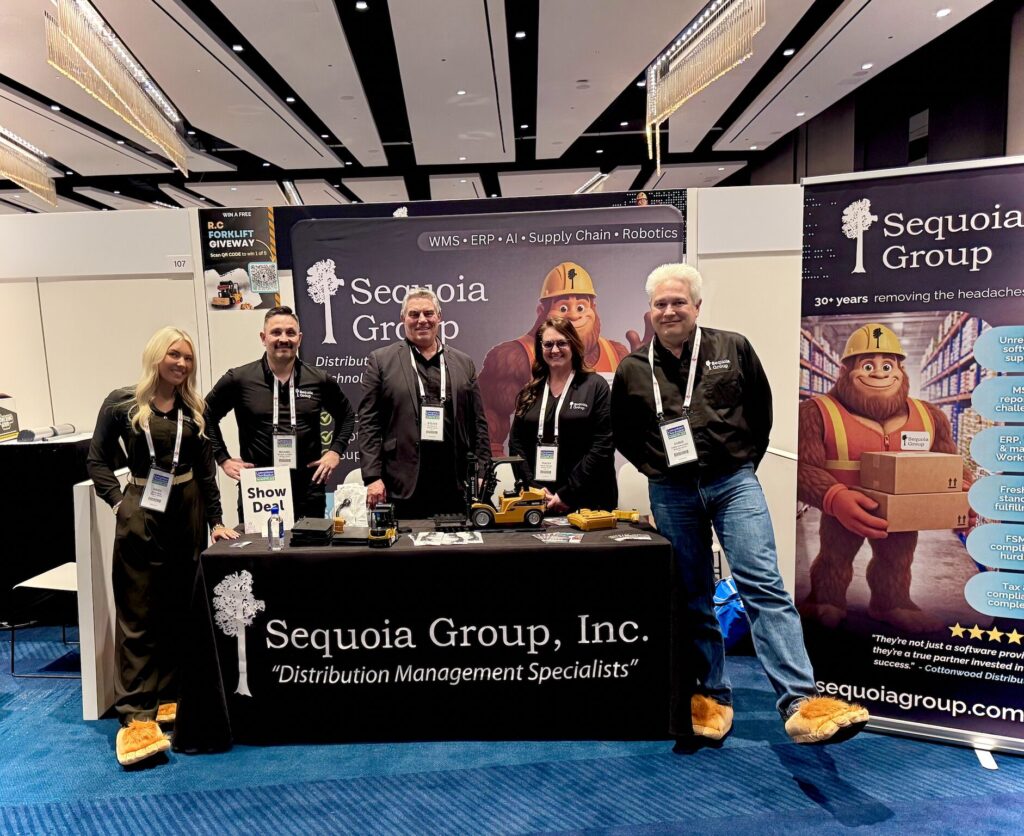
Sequoia Group’s Bigfoot-themed presence including the now well-known “SaaSquatch” and a few oversized slippers on the show floor created a fun entry point into otherwise serious conversations.
It also opened the door to meaningful discussions about:
- warehouse system challenges
- ERP limitations
- automation readiness
- operational visibility
Because behind the theme, the conversations were very real.
Looking Ahead
If there was one consistent takeaway from CDA Marketplace 2026, it is this:
Distribution is entering a more complex phase, and the old playbook is no longer enough.
Automation, AI, compliance, workforce dynamics, and security are all converging at the same time.
Individually, each is manageable.
Together, they require a more deliberate approach to systems, processes, and decision-making.
For many distributors, the next few years will not be defined by whether they adopt new technology.
They will be defined by how well they align that technology with how their business actually operates.
Continuing the Conversation
The Sequoia Group team looks forward to continuing conversations with CDA members throughout the year.
We will also be attending the Southern Association conference this June and look forward to reconnecting with many of the leaders we met in Arlington.
Because distribution doesn’t rest.