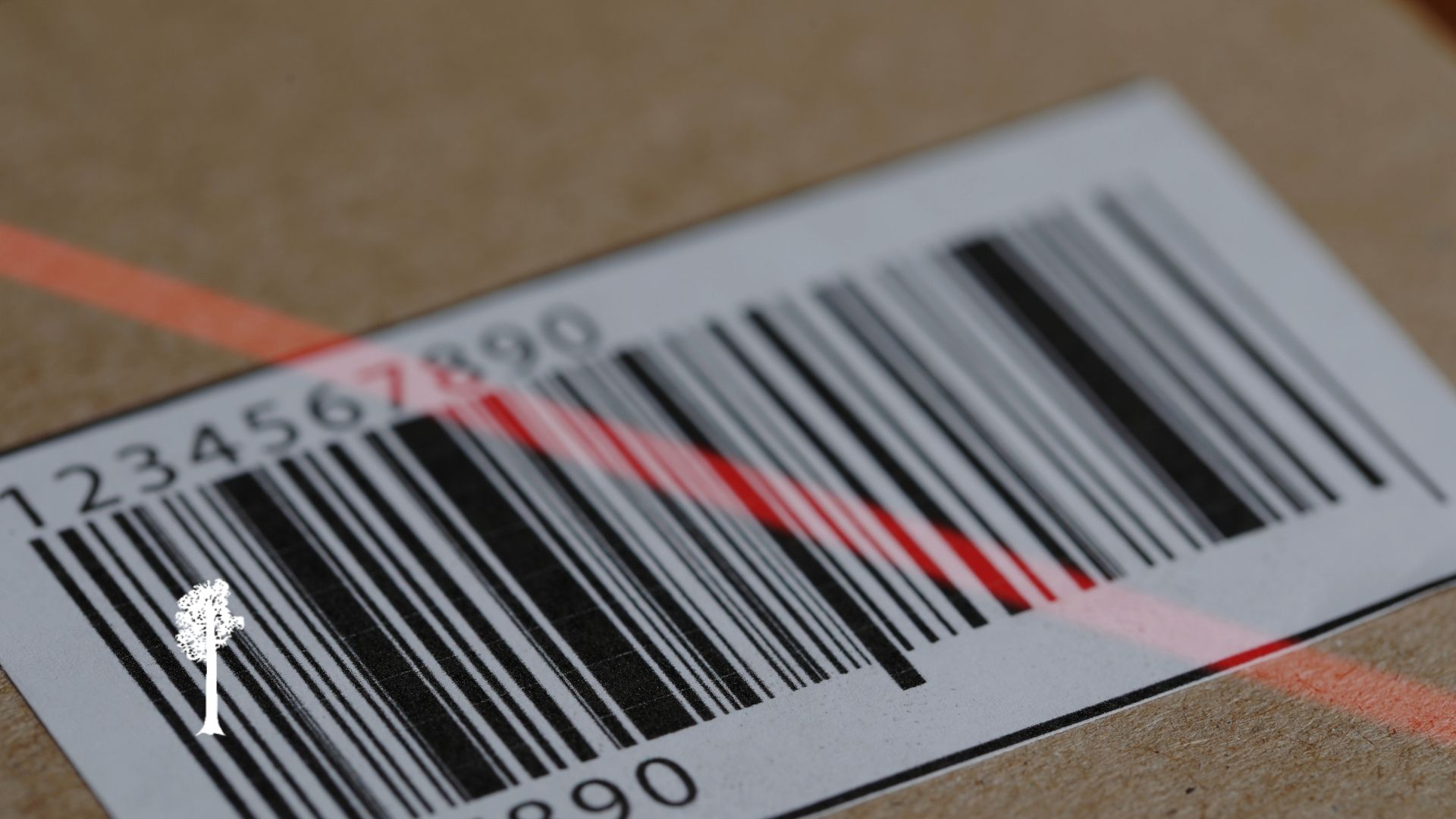
For more than 50 years, the familiar UPC barcode has done one job remarkably well:
Identify the product.
Scan it.
Find the item.
Move on.
But distribution is asking much more of product data today.
What lot is this?
When does it expire?
Is it subject to a recall?
Which variation is it?
Where did it come from?
Should we sell, hold, rotate, or remove it?
That is why the industry’s transition toward 2D barcodes matters.
And despite the name Sunrise 2027, distributors should not think of this as something happening only at the retail checkout lane.
The real opportunity begins much earlier.
The Barcode Is Changing Because the Data Is Changing
Traditional linear barcodes are excellent at carrying a product identifier.
Two-dimensional barcodes can carry substantially more information within a compact symbol.
Using GS1 standards, that information can include a GTIN as well as attributes such as lot or batch number, serial number, expiration date, best-before date, and other data elements depending on the application. (GS1, 2025–2026).
That changes what can happen during a scan.
Instead of identifying only:
“This is Item 123.”
The system can potentially receive:
“This is Item 123, Lot ABC, expiring on this date.”
One physical scan.
More operational context.
For convenience, wholesale, and 3PL environments, that creates opportunities well beyond checkout.
What Sunrise 2027 Actually Means
There is also an important misconception to clear up.
Sunrise 2027 does not mean that traditional UPC barcodes suddenly stop working on January 1, 2027.
GS1’s industry ambition is that by the end of 2027 retail point-of-sale systems should be capable of reading and processing a defined set of GS1-compliant 2D barcodes in addition to existing linear barcodes. During the transition, dual marking remains necessary in many circumstances, and GS1 says UPC barcodes will continue to be scanned beyond the sunrise date. (GS1, 2025–2026).
That provides breathing room.
But it should not create complacency.
Because the real readiness question is not whether a scanner can physically read a square barcode.
It is what happens after the beep.
The Warehouse Opportunity Is Bigger Than the Checkout Lane
GS1’s latest implementation guidance explicitly includes distributors and warehouse operators in the 2D transition.
That makes sense.
Consider receiving.
A case arrives containing item identification, lot information, and expiration data in a machine-readable symbol.
Today, an employee might scan the product and then manually enter or verify additional information.
In a properly prepared 2D workflow, more of that information can potentially be captured together.
Now consider putaway.
If the system understands expiration or lot information, it has better data available for inventory rules.
Picking.
Traceability.
Returns.
Recall management.
Inventory rotation.
Customer-specific requirements.
The barcode itself does not perform any of those activities.
It simply gives the operation better data to work with.
That distinction matters.
One Scan Only Helps If the System Knows What to Do
GS1 US commissioned 2026 research from VDC Research involving 400 U.S. organizations and additional supply-chain interviews. Its modeled analysis estimated that 2D-barcode workflows in warehouse and distribution environments could reduce certain operational costs by more than 60%, representing more than $500,000 in annual savings per facility under the modeled assumptions. The study attributes potential gains to fewer scan failures, less relabeling, lower shipment-error rates, and richer data capture. These are modeled benchmarks—not a guaranteed ROI for every warehouse. (GS1 US/VDC Research, 2026).
That qualification is important.
A 2D barcode does not automatically create 60% savings.
It can just as easily create a new problem:
The scanner reads information the host system does not understand.
GS1’s technical guidance makes clear that readiness involves more than imaging hardware. Systems must recognize barcode structures, process syntax correctly, transmit the appropriate information, and handle workflows where multiple barcodes may be present during the transition.
So distributors should evaluate three layers.
Can we scan it?
Can we interpret it?
Can our operation use it?
Those are very different questions.
A Practical Readiness Test
Start in the receiving dock.
Take a sample of products that already carry 2D symbols.
Scan them with the devices employees actually use.
Do not stop when the scanner beeps.
Look at the system record.
What data arrived?
Was the GTIN interpreted correctly?
Did lot information populate the correct field?
Did expiration data arrive?
Was information truncated?
Did the scan require additional manual entry?
What happened when both a linear and 2D barcode were visible?
Then move downstream.
Can that data drive putaway or rotation rules?
Can employees retrieve it during inventory research?
Does it survive a transfer?
Can it appear on the appropriate shipping or traceability records?
That is 2D readiness.
Not scanner capability. Workflow capability.
2D Barcodes Are Infrastructure, Not Compliance
The connection between 2D barcodes and traceability is especially relevant for food distributors.
But the two issues should not be confused.
A 2D barcode can make lot and expiration information easier to capture.
It does not, by itself, create a compliant traceability process.
Your systems still have to interpret the data.
Store it correctly.
Associate it with the appropriate transaction.
Maintain it as inventory moves.
And make the information accessible when it is needed.
The barcode is infrastructure.
What the organization builds around that infrastructure determines the value.
Start With the Use Case
There is no reason to begin by trying to redesign every barcode workflow across the enterprise.
Start with the business problem.
Are receiving teams manually keying expiration dates?
Are lot numbers frequently entered incorrectly?
Is recall research labor-intensive?
Is inventory rotation difficult?
Do customers require richer product information?
Is relabeling consuming warehouse labor?
Choose a use case where better data capture would create measurable value.
Then test the full process.
Because Sunrise 2027 is not really about putting a different symbol on a package.
It is about something much more useful:
Giving the physical product a better way to communicate with the systems running the operation.
For distributors, that conversation belongs in the warehouse now. Not in 2027.
Actionable takeaways
- Inventory handheld, fixed, and receiving-station scanners and test actual 2D symbols, not just stated hardware capability.
- Confirm that backend applications can parse, store, and use lot, expiration, and other GS1 data elements.
- Test dual-barcode scenarios to identify duplicate-read or wrong-symbol behavior.
- Select one operational use case: receiving, expiration management, traceability, recall, or relabeling – and pilot end to end.
- Include suppliers and customers in testing because barcode quality and data consistency cross organizational boundaries.
Sequoia Group helps distributors connect scanning, warehouse workflows, inventory systems, and business processes. A 2D-readiness assessment can identify where existing infrastructure is prepared, where data is being lost, and where automation can create real operational value.
Want to discuss your operations 2D readiness further? We’d love to start a conversation.